Showing posts with label Ranbir Kapoor. Show all posts

Wednesday, December 6, 2023

REVIEW 787: ANIMAL

Release date:

December 1, 2023

Director:

Sandeep Reddy Vanga

Cast:

Ranbir Kapoor, Rashmika Mandanna, Anil Kapoor, Bobby Deol, Tripti Dimri, Upendra Limaye, Suresh Oberoi, Saloni Batra  

Language:

Hindi with some English, Punjabi, Marathi etc 


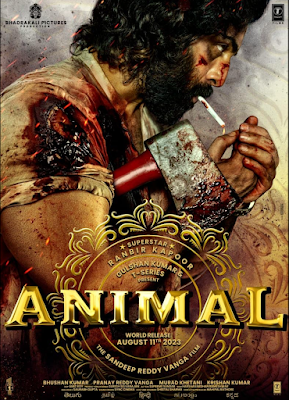
At one point in Animal, a stark naked Ranvijay Balbir Singh (Ranbir Kapoor in his nth role as a man-child) steps out of his mansion to stroll around the compound. (Don’t get too excited, his body is blurred out.) His team of male bodyguards first gawp at his nude frame, then a frisson of joy runs through them and they raise their guns in the air to let out several volleys of celebratory fire. This goes on till Ranvijay’s Daddy (Anil Kapoor) comes running out of the house to lead him away. The exhibitionism, it turns out, was in honour of a happy turn of events I won’t detail here. Beta, says Dad, I know you want to celebrate, but this is not the way. 


I cannot remember the last time the gifted veteran actor’s dialogue delivery was this strained and this unintentionally comical. Can’t blame him alone. That scene is so ridiculous, the phallic symbolism so in-your-face, the attempt at profoundness so laughable, and the sum and substance of the episode so juvenile that I burst out laughing. 


Ranvijay is fixated on his nether regions throughout Animal. He keeps drawing attention to the area by either pointing at his crotch or baring it or talking about it or griping about his underwear. In one scene, he speaks of both his “penis” and “anus” – his choice of words, not mine. It is all meant to be very very cool.


Animal is directed by Sandeep Reddy Vanga who debuted with Arjun Reddy (Telugu, 2017), and remade it in Hindi as Kabir Singh (2019). Animal – edited by Vanga and co-written by him with Pranay Reddy Vanga, Suresh Bandaru and Saurabh Gupta – seems bent on enraging those who slammed his earlier works. That goal is evident throughout this boring, blood-spattered film – in Ranvijay’s bizarre remarks and deeds, the all-pervasive violence, misogyny and gore. 


So that’s 3 hours and 21 minutes of revenge against those who criticise misogynistic cinema. 201 minutes of a desperate desire to shock and/or offend. 


Don’t be deceived into considering it mindless though. Bloodshed and immaturity may rage across Animal, but make no mistake about this: the film is steeped in messaging about victimhood – male victimhood and an allusion to the majority community too. 


Vanga’s film is a painfully long account of a boy longing for his father’s love. The said Dad is the industrialist Balbir Singh who has no time for his children. His neglect translates into anti-social behaviour and obnoxious cockiness only in Ranvijay who becomes an obsessive son and entitled lover, while his sisters somehow grow into women who don’t resent or bash up all and sundry.
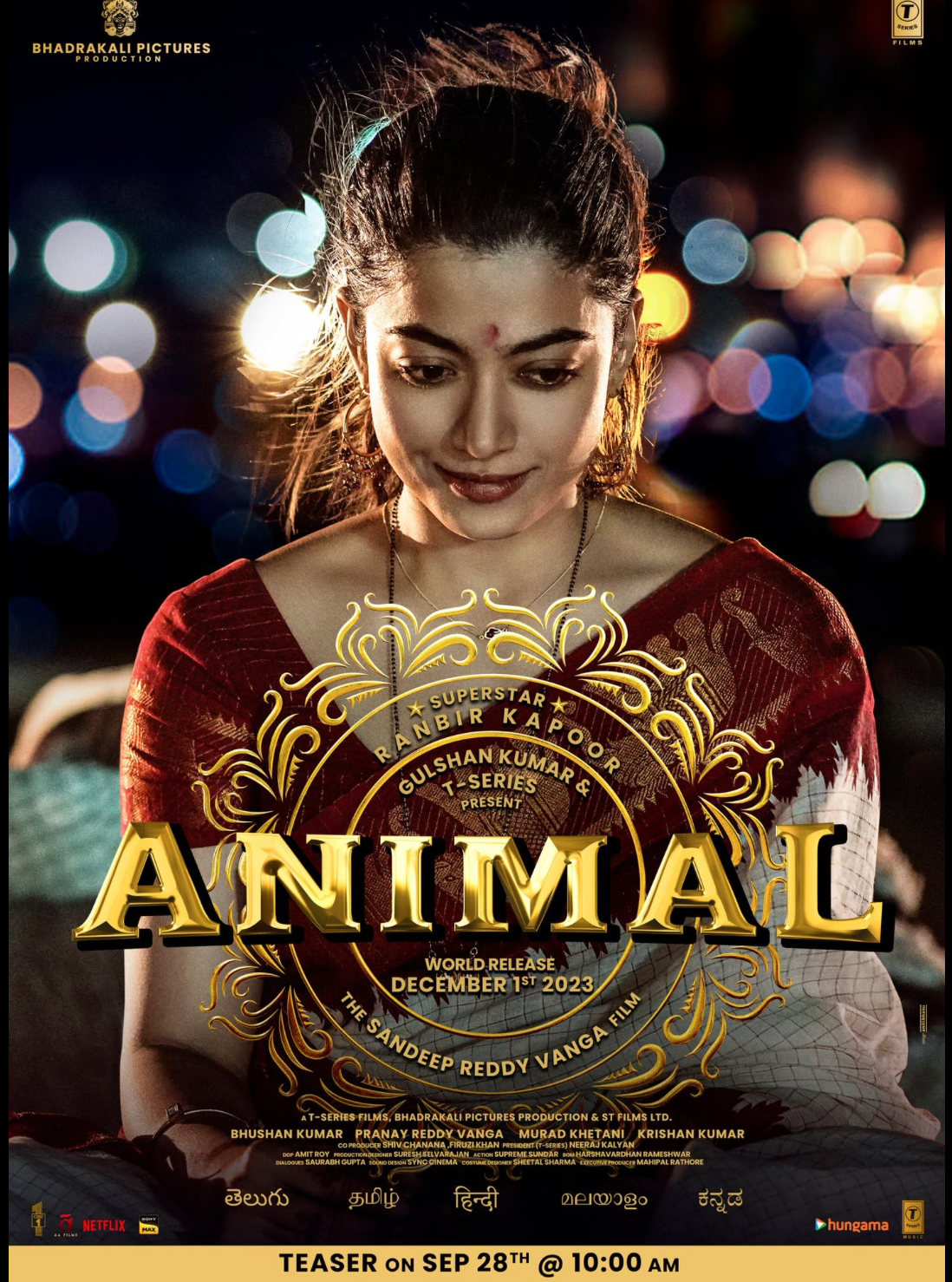
 

Daddy issues have been the subject of numerous films. The re-release of the iconic Malayalam film Spadikam this February, 28 years after its initial run, was a troubling reminder that male-dominated industries have for decades used paternal rejection to justify and normalise male violence, including a hero beating up a female romantic partner or spouse. Spadikam’s protagonist (Mohanlal) was an anguished soul who repeatedly struck his lover (Urvashi), but it was all portrayed as no big deal. In Animal, Ranvijay is aggressive with his wife Geetanjali (Rashmika Mandanna), going so far as to injure and scar her in an extended scene of violence, but it is all insidiously presented with deftly camouflaged empathy – for him. 


For the zillionth time, let me pre-empt the clichéd question that always comes from defenders of such cinema: violent men do exist in the real world and a violent man can certainly be the central character in a film – the issue here, as always, is the manner of the portrayal, the script’s indulgence towards him, the humour and coolth written into his fictional character, and the various means used to give him an allure despite his violent ways.


The strategised depiction of Ranvijay and his arch enemy Abrar (Bobby Deol) – arriving late in the second half – illustrates how the difference between a film’s gaze on two equally violent characters is used to steer audience reactions to them. Both commit horrifying acts, both treat women terribly, yet there is never a doubt about who is the hero or with whom the director wants our sympathies to lie. Animal may call itself Animal with reference to Ranvijay, yet his animalism is preceded by scene after scene dwelling on his childhood pain, his protective brotherly conduct, his aversion to sexual harassment, his advocacy of marital fidelity and so on, thus establishing him as a traumatised man with innate goodness. By the time his beastly side is exposed, a point has been firmly made that everything he does that is seemingly wrong is in fact done for the greater good. In contrast, the only Abrar we get to know is the brute who kills, rapes and terrorises. 


For good measure, Abrar’s Muslimness is underlined by pointedly mentioning his family’s conversion to Islam. 


If Ranvijay rips up human flesh, it is to avenge an attack on his father. If Ranvijay cheats on his wife (mind you, after lecturing other men when they cheat on their wives), he does it for a noble cause. Poor misunderstood Ranvijay had sex only to save his family, you know. 


Ranvijay assaults Geetanjali and a defence is woven into the script. He proposes that just as there is a first kiss and a first time having sex in a relationship, so also there should be a first slap. And guess who gets slapped first? 


Sigh. Poor misunderstood, suffering, victimised Ranvijay.


Poor Ranvijay who has a solitary wife, and is up against evil, brutal Abrar with three wives. 
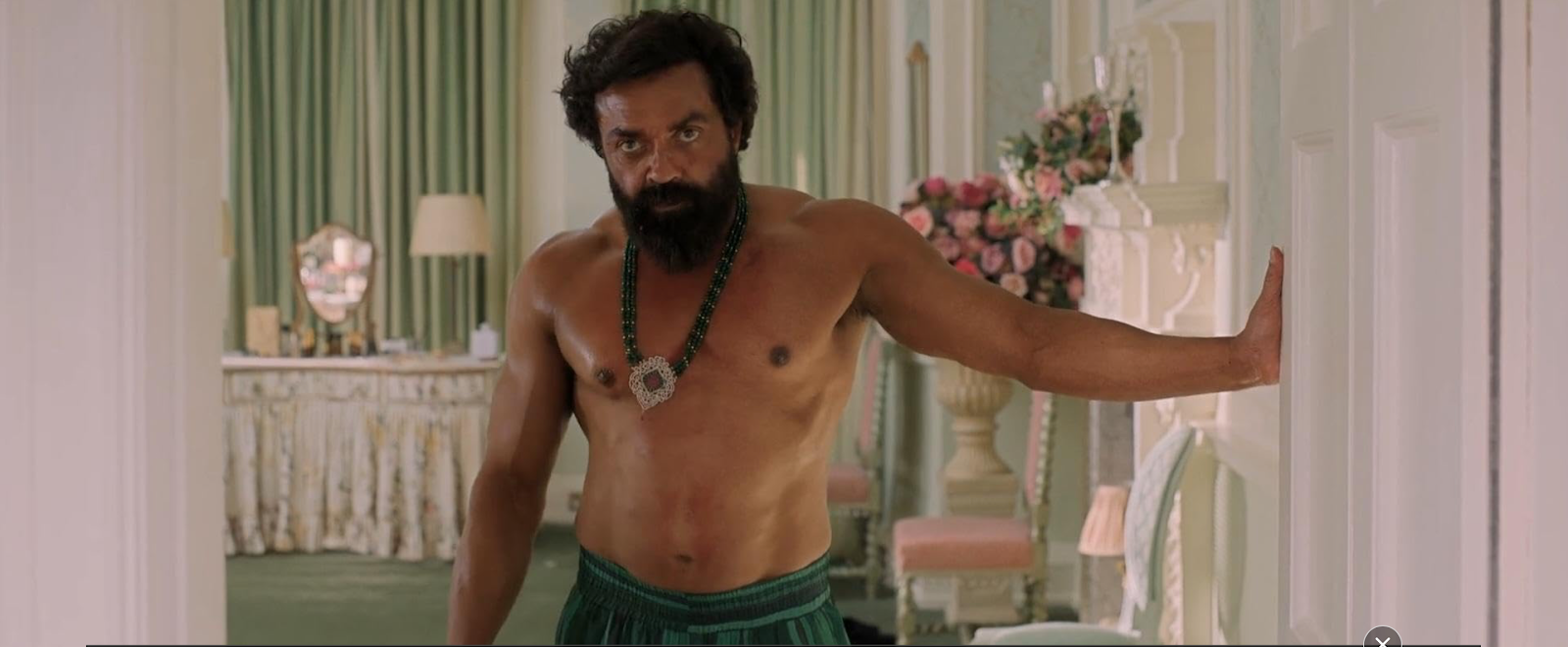
 

Bobby Deol’s Abrar has been shaped in the same mould as Alauddin Khilji from Padmaavat and other fictionalised interpretations of historical Muslim warriors who have dotted Hindi films in the past decade. Abrar eats cake in Animal in the way Padmaavat’s Khilji tore into meat. Abrar tears into his young wife in the way Padmaavat’s Khilji raped his wife. A filthy Abrar barges into a room filled with people and initiates sex with his bride, unmindful of the others’ presence.  


Now contrast this with the mellow tone of the scene in which Ranvijay converses with Geetanjali while examining the bruises he inflicted on her body. 


Note too that the relentless cruelty inflicted by Ranvijay on various people is bookended in this carefully constructed narrative by lengthy scenes emphasising his vulnerable nature. 


So, to circle back to that predictable question, “Violent men do exist, so what’s wrong with a film portraying reality?”, I repeat: yes, violent men do exist in the real world, and the issue here, as always, is the director’s gaze on them and their violence.


Animal brims with an intense dislike of women, outspoken women in particular, and evolved, gentle men. It begins with a derisive use of the word “toxic” in a fable narrated by Ranvijay about a monkey that harassed a princess. The contempt is obviously for the term “toxic masculinity”, popular in the feminist lexicon, that was widely applied to Vanga’s first two films. 


At one point, Ranvijay mocks Geetanjali for complaining because she has to change pads for four days in a month – he claims she complains, we don’t hear her doing so – while he, he tells her, has not complained though his body has been invaded by doctors during a life-threatening situation. Talk about false and stupid equivalences. Periods are a natural bodily function – often horribly painful, always incredibly inconvenient – that every woman bears for every single month of her entire reproductive life lasting for three to four decades. Ranvijay’s condition, on the other hand, is caused by a human aggressor; it is not the biological fate of all men. Here, Ranvijay is a version of misogynists who troll women for using the social media to raise awareness about cramps, excessive bleeding, agonising period pains and the trivialisation of these experiences by society. 


Oddly enough, the determinedly misogynistic Animal writes a feminist element into Ranvijay’s character – he explodes with anger when his brother-in-law roughs up his sister early in the film. There is no progression shown from that scene to his own extreme hostility to his wife. 


Animal’s terrible attitude to women runs alongside a cunning use of India’s religious minorities. 


Abrar and his cohorts are stereotypes diligently being peddled by Hindi cinema to echo the current Islamophobic national discourse. There is even a Muslim man in the picture who is described as a butcher from Istanbul. His sole contribution to Animal is a stomach-churning slaughter of men. 


The Sikhs in Animal are Ranvijay’s brethren and protectors, an extension of a positive stereotype: the fierce, fiercely loyal Sardarji. They are also his allies against Abrar’s marauding gang. All this leads up to a climactic confrontation between shirtless men on an airport tarmac – talk about Hindi film clichés! – in which a kirpan is handed to Ranvijay so that he can wrap up a fight unto death.
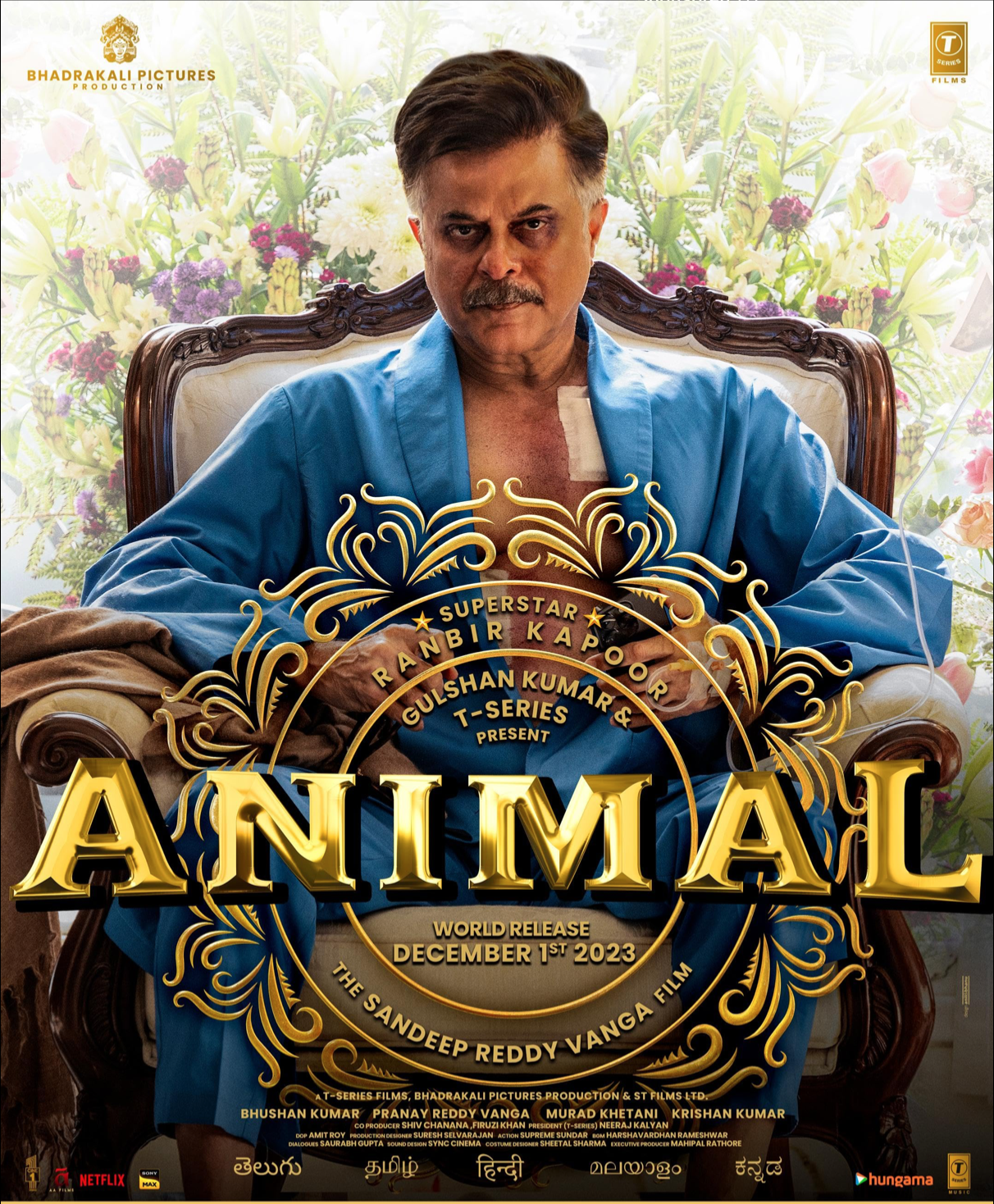
 

A Christian in Animal confuses Balbir Singh’s company logo with the Nazi Swastika. Since prominent Hindu religious symbols are ubiquitous in India, one assumes a Christian was chosen for that episode to play along with right-wing propagandists who project Indian Christians as alien Westerners. Presumably, the idea here is to hint at Hinduism being a globally misunderstood faith. 


Without giving away plot points, I can tell you this much: according to Animal’s underlying philosophy, Sikhs are family and very much in the Hindu fold, Muslims are family that chose the wrong path and are now out to destroy the mother clan, and Christians are the other. 


The mind games played by Animal are packaged in slick production design and cinematography, accompanied by a pulsating sound design, infectious music, and Ranbir’s immersive performance. 


Despite all this, I was bored stiff by the film. 


Startling violence is used here to compensate for a thin, trite storyline. In the first half hour, I was curious about where Vanga would take it, but I spent the remaining 171 minutes stifling yawns at the transparent effort to be disgusting. The camera zooms in on a pulverised human eye. A knife is run back and forth, back and forth, back and forth over a human neck in close-up instead of one swift slash that filmmakers usually favour. 


For the record, Animal is not the most violent film ever made in India. Others have done as bad or worse. It is ugly though – in both its use of violence and in its intent.


Ugly. Hate-filled. Tedious. Self-indulgent. And hawking a loathsome agenda. 


Misogynists insist that feminists hate men, although all that feminists want is gender equality. You know who hates feminist men? Answer: misogynists. You know who hates men in general? Answer: misogynists. I cannot for the life of me imagine a feminist – female or male – ever conceiving a film that makes men look as foolish, puerile, self-pitying and pathetic as Animal does. 


Rating (out of 5 stars): 0   


Running time:

201 minutes 


Poster courtesy: IMDB 

Saturday, February 9, 2019

THE annavetticadgoes2themovies BOLLYWOOD AWARDS 2018


ALIA OR TABU? AMIT TRIVEDI OR SEL? MANOJ BAJPAYEE OR RANBIR? A PICK OF 2018’S BEST WORK

As a follow-up to my list of best Bollywood films released in theatres in 2018, here is my pick of nominees and winners in categories recognised at most film awards functions worldwide. I have given a minimum of four and a maximum of seven nominations per slot, except in the case of the Best Film for which I have listed 10 nominees, because my list of 10 best films of 2018 has already been published.


For practical reasons, I have confined myself to films that were released in mainstream theatres. However, in coming years, as the number of films being directly released on online platforms increases, the criteria for this list will perhaps change. That is a consideration for a later date. For the moment, here are my picks of the best that 2018 had to offer in all departments of cinema emerging from what we call Bollywood (i.e. the Mumbai-based industry that produces films largely in the Hindi language), from acting to direction, music and other technical streams:

BEST FILM

I have ranked these from 1-10 in my Best Bollywood Films of 2018 article:

Nominees (all nominee lists are in alphabetical order):


Mulk


And the award goes to…
 
Raazi
 
BEST DIRECTOR

Nominees:
 
Anurag Kashyap (Mukkabaaz)

Dipesh Jain (Gali Guleiyan)

Meghna Gulzar (Raazi)

Shoojit Sircar (October)

Sriram Raghavan (Andhadhun)

And the award goes to…

Meghna Gulzar (Raazi)
 
BEST WRITING

Nominees:

Anudeep Singh, Anurag Kashyap, Vineet Kumar Singh, Mukti Singh Srinet, K.D. Satyam, Ranjan Chandel, Prasoon Mishra (Mukkabaaz)

Bhavani Iyer, Meghna Gulzar (Raazi)

Dipesh Jain (Gali Guleiyan)

Juhi Chaturvedi (October)

Sriram Raghavan, Hemanth Rao, Arijit Biswas, Pooja Ladha Surti, Yogesh Chandekar (Andhadhun)

And the award goes to…
 
Bhavani Iyer, Meghna Gulzar (Raazi)
 
BEST ACTOR (FEMALE)

Nominees:
 
Alia Bhatt (Raazi)

Anushka Sharma (Pari)

Anushka Sharma (Sui Dhaaga)

Neena Gupta (Badhaai Ho)

Rani Mukerji (Hichki)

Tabu (Andhadhun)

Zoya Hussain (Mukkabaaz)

And the award goes to…
 
Alia Bhatt (Raazi)

BEST ACTOR (MALE)  

Nominees:

Ayushmann Khurrana (Andhadhun)

Gajraj Rao (Badhaai Ho)

Manoj Bajpayee (Gali Guleiyan)

Nawazuddin Siddiqui (Manto)

Rajkummar Rao (Omerta)

Ranbir Kapoor (Sanju)

Vineet Kumar Singh (Mukkabaaz) 

And the award goes to…
 
Ranbir Kapoor (Sanju)
 

BEST SUPPORTING ACTOR (FEMALE)

Nominees:

Anuja Sathe (Blackmail)

Gitanjali Rao (October)

Rasika Dugal (Manto)

Shahana Goswami (Gali Guleiyan)

Swara Bhasker (Veere Di Wedding)

And the award goes to…
 
Shahana Goswami (Gali Guleiyan)

BEST SUPPORTING ACTOR (MALE)

Nominees:

Abhishek Banerjee (Stree)

Angad Bedi (Soorma)

Aparshakti Khurana (Stree)

Jimmy Sheirgill (Mukkabaaz) 

Prateek Kapoor (October)

Priyanshu Painyuli (Bhavesh Joshi Superhero)

Vicky Kaushal (Raazi)
 
And the award goes to…
 
Vicky Kaushal (Raazi)

BEST CAST

Nominees:

Andhadhun:
Tabu, Ayushmann Khurrana, Radhika Apte, Anil Dhawan, Manav Vij, Chhaya Kadam, Ashwini Kalsekar, Zakir Hussain, Pawan Singh, Kabir Sajid

Gali Guleiyan:
Manoj Bajpayee, Om Singh, Shahana Goswami, Arbaaz Khan, Neeraj Kabi, Ranvir Shorey

Mukkabaaz:
Vineet Kumar Singh, Zoya Hussain, Jimmy Sheirgill, Ravi Kishan

Radhika Madan, Sanya Malhotra, Vijay Raaz, Sunil Grover, Namit Das, Abhishek Duhan, Saanand Verma

Raazi:
Alia Bhatt, Vicky Kaushal, Jaideep Ahlawat, Rajit Kapur, Shishir Sharma, Soni Razdan, Amruta Khanvilkar, Arif Zakaria, Ashwath Bhatt, Aman Vashisht

Stree:
Rajkummar Rao, Shraddha Kapoor, Aparshakti Khurana, Abhishek Banerjee, Pankaj Tripathi, Atul Srivastava

Tumbbad:
Sohum Shah, Jyoti Malshe, Dhundhiraj Prabhakar Jogalekar, Anita Date, Deepak Damle, Ronjini Chakraborty, Mohd Samad

And the award goes to…

Andhadhun
Tabu, Ayushmann Khurrana, Radhika Apte, Anil Dhawan, Manav Vij, Chhaya Kadam, Ashwini Kalsekar, Zakir Hussain, Pawan Singh, Kabir Sajid

BEST MUSIC

Nominees:

Andhadhun:
Songs: Amit Trivedi
Background score: Daniel B. George

Songs: Pravin Kunwar, Oni-Adil, Ranjan Sharma
Background score: Ranjan Sharma

Songs: Amit Trivedi
Background score: Hitesh Sonik

Songs: Niladri Kumar and Joi Barua
Background score: Hitesh Sonik

October:
Shantanu Moitra, Anupam Roy, Abhishek Arora

Raazi:
Songs: Shankar Ehsaan Loy
Background score: Shankar Ehsaan Loy and Tubby

And the award goes to…
 
Raazi:
Songs: Shankar Ehsaan Loy
Background score: Shankar Ehsaan Loy and Tubby

Note: Fabulous though it is, I have not included the music of Dhadak here (songs: Ajay-Atul, background score: John Stewart Eduri) only and only because a bulk of it has been transposed here from Ajay-Atul’s soundtrack for the 2016 Marathi blockbuster Sairat of which Dhadak was a Hindi remake.

BEST SONG

Nominees:

Ae Watan (from Raazi):
Music: Shankar Ehsaan Loy
Lyrics: Gulzar (incorporating lines from Allama Iqbal’s Lab pe aati hai dua)
Singing: Sunidhi Chauhan and the Shankar Mahadevan Academy children’s chorus

Dilbaro (from Raazi):
Music: Shankar Ehsaan Loy
Lyrics: Gulzar
Singing: Harshdeep Kaur, Vibha Saraf and Shankar Mahadevan

Meri Ankhein (from Angrezi Mein Kehte Hain):
Music: Pravin Kunwar
Lyrics: Yogesh
Singing: Shaan, Vaishali Mhade and Pravin Kunwar

Naina Da Kya Kasoor (from Andhadhun):
Music: Amit Trivedi
Lyrics: Jaideep Sahni
Singing: Amit Trivedi

Namo Namo (from Kedarnath):
Music: Amit Trivedi
Lyrics: Amitabh Bhattacharya
Singing: Amit Trivedi

O’ Meri Laila (from Laila Majnu):
Music: Joi Barua
Lyrics: Irshad Kamil
Singing: Atif Aslam and Jyotica Tangri

And the award goes to…

Ae Watan (from Raazi):
Music: Shankar Ehsaan Loy
Lyrics: Gulzar (incorporating lines from Allama Iqbal’s Lab pe aati hai dua)
Singing: Sunidhi Chauhan and the Shankar Mahadevan Academy children’s chorus (Soham Vavekar, Advait Raman Shankar, Tanirika Chakraborty, Vasudha Tiwari, Ananya Halarnkar, Tejas Tambe, Ghazal Javed, Archana Hegdekar & Satyajeet Jena)
 

BEST EDITING
 
Nominees:
 
Aarti Bajaj, Ankit Bidyadhar (Mukkabaaz) 

Aditya Warrior (Omerta)

A. Sreekar Prasad (Manto)

Chris Witt (Gali Guleiyan)

Nitin Baid (Raazi)

Pooja Ladha Surti (Andhadhun)

Sanyukta Kaza (Tumbbad)

And the award goes to…
 
Chris Witt (Gali Guleiyan)
 
BEST CINEMATOGRAPHY

Nominees:

Avik Mukhopadhayay (October)

Avinash Arun (Karwaan)

Kai Miedendorp (Gali Guleiyan)

K.U. Mohanan (Andhadhun)

Pankaj Kumar (Tumbbad)

Ranjan Palit (Pataakha)

Sachin K. Krishn (Daas Dev)

And the award goes to…
 
Avik Mukhopadhayay (October)
 

BEST SOUND DESIGN

Nominees:

Anish John (Pari)

Dipankar Jojo Chaki (October)

Kunal Sharma (Raazi)

Kunal Sharma (Tumbbad)

Madhu Apsara (Andhadhun)

Mandar Kulkarni (Omerta)

Shajith Koyeri & Savitha Nambrath (Stree)

And the award goes to…
 
Kunal Sharma (Tumbbad)

 
BEST PRODUCTION DESIGN

Nominees:

Aditya Kanwar (Bhavesh Joshi Superhero)

Meenal Agarwal (Pari)

Nitin Zihani Choudhury, Rakesh Yadav (Tumbbad)

Rita Ghosh (Manto)

Shazia Zahid Iqbal (Mukkabaaz) 

Snigdha Karmahe, Pankaj Poal, Anita Lata Rajagopalan, Donald Reagen Gracy (Andhadhun)

Sujata Sharma Virk (Gali Guleiyan)

And the award goes to…
 
Nitin Zihani Choudhury, Rakesh Yadav (Tumbbad)

MOST INTERESTING DEBUTANT IN A LEAD OR SUPPORTING ROLE
 
Nominees:

Gitanjali Rao (October)
 
Om Singh (Gali Guleiyan)

Radhika Madan (Pataakha)

Sara Ali Khan (Kedarnath)

Zoya Hussain (Mukkabaaz)

And the award goes to…
 
Zoya Hussain (Mukkabaaz)

Note: I am not nominating Dulquer Salmaan in this category, although Karwaan was his first Bollywood film, because he is already an established actor (a superstar, to be precise) of Mollywood with hits also in Kollywood and Tollywood. Nominating him in a debutant category for Bollywood films makes about as much sense as Hollywood nominating Priyanka Chopra as a debutant.

ALSO READ:


A VERSION OF THIS ARTICLE HAS BEEN PUBLISHED ON FIRSTPOST:


Photographs courtesy:


October poster: https://www.facebook.com/OctoberFilm2018/      


Gali Guleiyan poster: https://www.facebook.com/GaliGuleiyan/      

Tumbbad poster: https://www.facebook.com/TumbbadFilm/