Let’s
get this out of the way first: Thank you for the gratifying rush of questions
in response to my Best Indian Films list published earlier this month. The most
common of the lot was, “When will you give us your Best Hindi / Telugu / Tamil
/ Malayalam Films?”
A
separate list for each language industry, in a nation that produces a couple of
thousand films a year, is humanly impossible to do for a single journalist.
This is why critics have areas of expertise, just as political reporters have
beats. I will certainly give you a compilation though from the industry that
has been my field of focus for years now, Hindi. So here it is, (oh how I love
saying these three words) on popular demand, my list of Best Hindi Films 2015.
BEST HINDI FILM:
Winner:
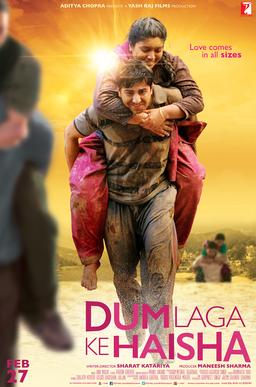
Dum Laga Ke Haisha
Imagine a sensible film steeped
in common-sense messaging sans sermons. Imagine a romantic drama in which the
heroine is overweight yet the director views her through a lens that can see
beyond her girth. Imagine such a film being light-footed rather than heavy and
dull. Imagine that film being made by a production house that is as
commercially inclined as they get.
You don’t have to trouble your
imagination if you have seen Yash Raj Films’ Dum Laga Ke Haisha (DLKH), writer-director Sharat Katariya’s sweetly low-key
film set in the Haridwar of 1995. DLKH is about a boy with low self-esteem and
no achievements (Ayushmann Khurrana) who is compelled by his family to marry a
smart, feisty, educated girl (Bhumi Pednekar) despite his objections to her
plus-sized physique.
Bhumi was the find of 2015.
Impressive though he was in his debut Hindi film Vicky Donor in 2012, Ayushmann truly arrived as an actor with this
one, completely losing his own personality in his character. Together with one
of the best supporting casts of the year, the two youngsters delivered an
appealing coming-of-age love story far removed from the high decibel levels
Bollywood too often resorts to in its bid to attract mass audiences.
Anu Malik’s gentle
tunes for DLKH are perfectly suited
to the overall tone of the film, none more so than the prettily melodious Moh
moh ke dhaage. When lyricist Varun
Grover writes “Tu din sa hai, main
raat
/ Aa na dono mill jaayein
shaamon ki tarah (You are like the day and I the night / Come, let us meet
as they do in the evening)” you could almost read this blossoming love as a
metaphor for the increasing melting of boundaries between what is deemed
mainstream and art cinema by one of India’s largest film industries.
DLKH is not just enjoyable and well made, it is one of
many turning points for Hindi cinema witnessed in 2015.
(For the original review of Dum Laga Ke Haisha, click here)
First Runner-up:
Talvar
Recounting a
real-life crime in a feature film is never easy. When the case is as recent and
as controversial as the Aarushi Talwar-Hemraj murder, it is a massive
challenge.
Director Meghna
Gulzar is clearly up to the task in Talvar,
a fictionalised, documentary-like feature about the double homicide committed
in 2008.
Irrfan Khan
headlines the film’s talented cast relating the botched-up probe into one of 21st
century India’s most high-profile criminal cases.
Although Talvar narrates various versions of the
killings and the investigation from differing viewpoints, painting the parents
innocent and guilty by turns, it has its own stance too: that the messed-up
Indian criminal justice system can be vindictive towards citizens to cover up
its own inadequacies, that the police’s pre-historic social prejudices colour
their work, that the financial and cultural chasm separating co-existing
socio-economic classes has volcanic implications, and that when it is at its
worst, the news media can destroy lives.
Despite its evident
position on these issues, Talvar remains
firmly focused on facts. In a cinematic landscape now used to Ram Gopal Varma
and Anurag Kashyap’s more dramatic gangster flicks, Meghna’s choice of
storytelling style makes this a landmark crime film.
Second Runner-up:
Drishyam
If you thought – as
I did – that it would not be possible to improve upon director Jeethu Joseph’s Malayalam
film Drishyam (2013), you thought
wrong. The Hindi retelling by Nishikant Kamat is as suspenseful as the
original, yet minor tweaks make it an interesting, thoughtful remake.
This is the story
of a crime and its incredible cover-up. The author of that brilliance is a
small-time businessman in small-town Goa, protecting his family when their
relatively uneventful life takes a dramatic turn. His combatant in the case is
the state’s Inspector General of Police (Tabu).
Even given the
traditional patriarchal set-up in both films, with the male protagonist as
protector-provider and his spouse as stay-at-home mother, the Hindi version
still manages to be less socially conformist than the first film. The
noticeably lower age difference between the lead couple here (Ajay Devgn and
Shriya Saran) in contrast with Mohanlal and Meena in the Malayalam film and the
slightly less conservative conversations between them, makes this a nuanced
adaptation rather than a carbon copy.
Ajay wisely chose
to play the central character as a more stoic fellow than Mohanlal did, thus
pre-empting acting comparisons with a stalwart.
None of this, of
course, would matter to those who have only seen the Hindi Drishyam, which stands tall even when it stands alone. In the
universe of thrillers, this film is uncommon in the way it builds up a sense of
urgency despite its unhurried pace. Good and evil are not black and white
notions here. And in the end, the mystery lies not in whodunnit (we already
know that) but in how – and if – they will get away with it, because it gets us
to care.
(For the
original review of Drishyam, click here)
Third Runner-up:
NH10
Anushka Sharma
broke new ground by turning producer with NH10.
She is not the first, but she is among the few female producers in this
country. When the moneybags are almost all men, the male gaze is bound to
dominate a nation’s cinema. If more such enterprising women emerge across
states, in time more meaty roles for Indian actresses will follow.
This milestone,
however, is not what recommends director Navdeep Singh’s NH10. What marks it out cinematically is its grippingly told saga
of civilisational clashes between adjacent worlds whose inhabitants are often
oblivious to – even disinterested in – each other’s existence.
Anushka in this
film plays a city-bred professional living in the city of Gurgaon, a suburb of
Delhi located in Haryana. Tragedy comes visiting when she and her husband (Neil
Bhoopalam) stray into rural Haryana. What follows is a petrifying mix of
extreme gender biases, caste prejudice and violence.
NH10 is filled with fine actors, but the discovery of
the film is Darshan Kumaar’s versatility. In his turn as a murderous villain
here, it is hard to spot the soft-spoken husband from 2014’s Priyanka
Chopra-starrer Mary Kom.
Actress Anushka is
already doing well for herself in Bollywood. What a splendid start this is
though for producer Anushka.
(For the
original review of NH10, click here)
THE CONTENDERS:
5: Piku
Who in Bollywood
would choose as their film’s hero a physically and behaviourally constipated
old man?
Answer: director
Shoojit Sircar and writer Juhi Chaturvedi who earlier teamed up for Vicky Donor, a film with sperms and
semen as its focal point yet – wonder of wonders! – not a single ewww-worthy
joke.
Piku brings together Deepika Padukone playing a
short-tempered entrepreneur from whose name the film draws its title, Amitabh
Bachchan as her crotchety
septuagenarian father with tummy troubles, and Irrfan Khan as Rana Chaudhary, a
taxi company owner who finds himself thrown between them on an unplanned road
trip.
Toilet humour is a
dominant element in the film, yet it does not veer towards being a juvenile
crapfest of the kind you might expect from Hollywood’s Farrelly brothers or
Bollywood’s Team Kyaa Super Kool Hain Hum.
This in itself is an achievement. Even more commendable is the manner in which
the comedic stream – unrelenting, unpredictable and hilarious – takes nothing
away from the family and friendships around which Piku revolves.
The starting block
of the story is Piku’s relationship with her testy Baba, but what envelopes
later reels in warmth and tenderness is the developing, as-yet-undefined bond
between the young lady and the older Rana. Who knew electricity could flow
between Deepika and Irrfan? It does.
If you must visit a
stereotype, do it the Shoojit-and-Juhi way, laughing with the Bengalis through the Big B’s Bhaskor Banerjee,
rather than at them as most habitual
community cliché users do.
The unexpected
bonus here is Moushumi Chatterjee playing Piku’s maternal aunt. The pretty
veteran was a firebrand in 2013’s Bengali film Goynar Baksho. Is she choosing to act less or is male-obsessed
Indian cinema not offering her enough worthwhile parts?
For this and so
much else, bless you Piku!
(For the
original review of Piku, click here)
6: Masaan
If half a film could be featured
on a list, then debutant Neeraj Ghaywan’s Masaan
might have been my No. 1. Vicky Kaushal’s brilliant turn as an educated,
professionally ambitious boy from a traditionally low-caste family, in love
with a poetry-loving upper-caste girl played to charming effect by Shweta
Tripathi is affecting in ways that no words can explain.
The direction of this portion of
the film is assured, the writing (by Varun Grover) impeccable, the acting
perfect. Apologies for sounding dramatic, but whenever I think of those two
innocent, ill-fated lovers, I sigh and my heart breaks into a million pieces,
only to heal itself with the memory of Vicky’s smile.
This boy is God’s gift to
womankind and to acting.
Less engaging is the other half
of Masaan featuring Richa Chadha and
Sanjay Mishra as a troubled father and daughter. Individually they’re powerful
characters, together though their relationship lacks something in its
execution. Still, her strength, her sexual experimentation, the authorities’ response
to it, her spirit that refuses to be subdued even through a traumatic phase and
her determination to escape her suffocating environs are compelling to say the
least.
Most moving though is the film’s
spotlight on clandestine relationships and this excruciating question: how do
you mourn the loss of your beloved when no one else they love knows you were
together or is likely to think you had a right to be?
There
goes my wretched heart again.
(For the original review of Masaan, click here)
7: Titli
This one too is a directorial
debut. If Masaan is muted and
poignant, Kanu Behl’s deceptively titled Titli
(meaning: butterfly) is distressing and in places, difficult to watch.
This is a story of a
violence-prone, car-jacking threesome of brothers and their instinctive
bonding. The youngest (Shashank Arora) –
named Titli because his late mother had been hoping for a daughter when he was
born – is planning his escape from the nest when his elder siblings (Ranvir Shorey and Amit Sial) get him married to
tie him down. The new woman (Shivani Raghuvanshi)
in their so far all-male home comes armed with a fiery disposition and a
secret.
Despite the
appearance of a boys’ club, Titli is
a stinging, unspoken condemnation of patriarchy. Ranvir delivers a career-best
performance and Shivani is simply superb.
The detailing in the depiction of
Delhi – her sociology and geography – is commendable.
Interestingly, Kanu’s co-writer
on Titli is Dum Laga Ke Haisha’s director Sharat Katariya. What a dream year it
must be in which you can showcase your versatility with two vastly contrasting
films within a span of just a few months. Equally a cause for celebration is
that Yash Raj Films co-produced Titli,
an unusual project for a studio closely identified with flying chiffons, acres
of tulip and mustard fields, spotlessly made up women and immaculately turned
out men.
These developments and the
emergence of distinctive new voices like Neeraj and Kanu could well be reason
enough for history books some day to single out 2015 as a watershed year for Hindi
cinema.
(For the
original review of Titli, click here)
8: Margarita With A Straw
Hindi films centred around
persons with disabilities have too often concentrated on the disability rather
than the person. Margarita With A Straw
is different. Shonali Bose’s film stars Kalki Koechlin delivering a remarkable
performance as a woman whose cerebral palsy does not define her. Able backing
comes from the ever-dependable Revathy playing her Aai.
Laila Kapoor is talented,
sociable, sexually adventurous and wheelchair bound. Who would have predicted
that such a woman could ever be the heroine of a cheery Hindi-English film from
a once-formula-driven industry? In the not-too-distant past, she would in all
likelihood have been placed in a dismal or melodramatic, high-strung film. This
is not that kind of venture.
For the
most part, Margarita… is realistic in its portrayal of
Laila’s physical constraints even while remaining positive at all times. Is the
sunshine too much? Just occasionally it does seem so, but in a cinematic
scenario that more often than not appears to assume that those with physical
challenges must lead all-round depressing lives, optimism makes for a pleasant
change.
(For the original review of Margarita With A Straw, click here)
9: Dil
Dhadakne Do
It is
weird that Anil Kapoor has received Best Supporting Actor noms in this awards
season, because Zoya Akhtar’s Dil
Dhadakne Do (DDD) is one of those
rare Hindi films with an ensemble cast. Clearly Bollywood award givers have not
evolved as far as the industry has.
Anil in DDD plays business tycoon Kamal Mehra who is determined to keep up
the appearance of a happy marriage with his wife Neelam (Shefali Shah). He
bullies his son (Ranveer Singh) over his career inclinations while failing to
recognise the evident entrepreneurial talents of his daughter (Priyanka Chopra)
who, as it happens, is stuck in a loveless marriage. High drama occurs on the
high seas when the Mehras take off on a cruise to celebrate Kamal and Neelam’s
wedding anniversary in the company of their high-society ‘friends’.
The allure of DDD lies in its honesty about families.
Nobody is as perfect as Sooraj Barjatya’s clans suggest. Kamal is an adulterer
whose hypocrisy is exposed by his children. The easy route to the portrayal of
Neelam would have been to excuse her as a helpless victim. Instead the
storyteller refuses to accept her pretence that she did not know of or could
have done nothing about her husband’s affairs.
The highlight of the film though
is the brother-sister bond. It is a measure of Priyanka and Ranveer’s
considerable acting talents and the quality writers they are working with that
they could switch from playing such believably close siblings to the sexual
chemistry between their characters in Bajirao Mastani within the same year.
DDD is
highly entertaining and makes several points that mainstream Bollywood would
usually not dare to make: that most human beings are flawed, some flaws are
worth forgiving but some are not, most families are flawed, some are worth
fighting to preserve while some are not. Take that, Mr Barjatya.
(For the original review of Dil Dhadakne Do, click here)
10: Bajrangi Bhaijaan
In a
national context where “religious sentiments” are more prone to getting “hurt”
with each passing day, Bajrangi Bhaijaan
is one of the most cleverly handled films on communal amity you will ever see.
Director Kabir Khan pulls at every conceivable heart string with his story of a
Pakistani Muslim child called Shahida (Harshaali Malhotra) who encounters the
Hanuman bhakt Bajrangi (Salman Khan)
when she gets lost in India. Bajrangi is a man with a golden heart yet many
prejudices derived from his background, but that tiny girl could melt a
glacier. And she does.
His
efforts to return her to her family across the border coupled with the
intrinsic commentary about India-Pakistan and inter-religious harmony, could be
seen as an enterprise in courage in a country that just months earlier was
battling fundamentalists’ demands for a ban on PK and threats of violence. The film soldiered on anyway, getting
an entire nation to fall in love with a Pakistani tot and getting Bajrangi – a
committed vegetarian and a devout Hindu from a family affiliated to the Sangh
Parivar – to sing and dance to a song with lyrics that go “Thodi biryani bukhari
/ Thodi phir nalli
nihari
/ Le aao aaj dharam bhrasht ho
jaaye (Bring on some biryani / Bring on some meat preparations / Never mind
my religious restrictions today)”.
Salman is his usual self in Bajrangi Bhaijaan, a star aware of his
charisma. There is more to Harshaali than her irresistible cuteness – the kid
can act. She is a scene stealer along with a man who walks on to the screen
half way through the story and walks away with the film, Nawazuddin Siddiqui.
I confess the play-it-safe ending
almost ruined the film for me, being such a contrast to the refusal to mince
words even while avoiding treading on touchy toes until that point. Yet in the
denouement, perhaps to assuage the feelings of those Sangh members and acolytes
who were offended by PK, the film has
the Muslim child yelling out the words “Jai
Shri Ram” repeatedly whereas a reformed Bajrangi merely makes a gesture
towards Allah hafiz but stops short
of saying the words. Ah well, sadly, such is life. We cannot blame artists
alone for being overly cautious when we have repeatedly failed to protect them
from the wrath of communal goons.
Bajrangi Bhaijaan is
intelligent, sensitive and fun.
(For the original review of Bajrangi Bhaijaan, click here)
A Version Of This Article Was Published
In Two Parts On Firstpost on January 18 & 19, 2016:
Related article: Anna M.M. Vetticad’s Best Indian Films
2015
OR
Photographs
courtesy:
(7)
Titli poster: Yashraj
Films