Showing posts with label Sanjeev Kumar. Show all posts

Thursday, April 10, 2014

RAMESH SIPPY UNPLUGGED / INTERVIEW PUBLISHED IN MAXIM MAGAZINE


(A shorter version of this interview by Anna MM Vetticad appeared in the August 2013 issue of Maxim magazine. The full text was first published in Maxim India’s online edition.)

“THE FILM INDUSTRY IS MARKET-DRIVEN. AND MARKETS ARE MALE-DRIVEN,” SAYS RAMESH SIPPY
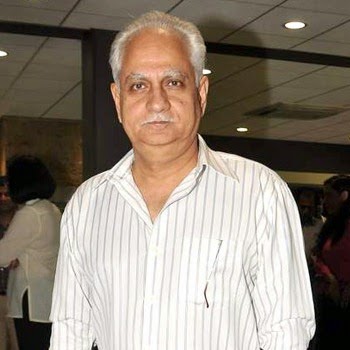
There’s no generation since the 1970s that hasn’t been influenced by the brilliance of RAMESH SIPPY. He’s behind the film that’s considered by many—including Maxim—to be the most incredible Hindi action-drama ever, and he’s been in semi-hibernation for almost two decades. In an exclusive chat with Maxim, he says he’s ready for the next leap.
Does it make you happy or bother you that you are always identified as the director of Sholay although you’ve made many other successful films?
It makes me happy. In anyone’s career, there will be a film that stands out for many reasons for its achievements and milestones. After all, Sholay was a front-runner since it took cinema to a different level. It broke certain earlier barriers with its treatment of friendship, the suggestion of widow remarriage. It’s not like such things didn’t exist in movies before, but this one went as far as Sanjeev Kumar taking his widowed daughter-in-law to discuss marriage for her. So it’s not like it was just an action adventure or a revenge saga, but it was also touching upon several social issues very nicely which made it a wholesome film that had something important to say.
Okay, let me put that another way: Is Sholay a millstone around your neck, which overshadows your other successes?
No, it’s a bell around my neck, announcing itself wherever I go. It resonates everywhere, in TV and writings even today, but it hasn’t overshadowed my other work.
You mentioned Jaya Bachchan’s character in Sholay. The 1970s were a bad decade for women in Hindi films, so why did you break free from prevailing gender norms and risk a film like Seeta Aur Geeta with the heroine as the central character, that too in a double role?
Even when I made Andaz people wondered why I chose that as my first film. To me, the point was that anyone watching it would want those two people to get together. It’s a different matter that she was a widow so it was an important film for women, but I just saw it as a story that needed to be told.
Andaz’s hero was equally important but Seeta Aur Geeta was totally heroine-focused…
It’s always a risk. Even when Andaz was made it was a risk. Even Shammi Kapoor thought that. He said, “I’m supposed to be a rebel star and a dancing star. Everyone knows me for my songs and dances. Young man, are you sure you want to do this?” And I said, “Do you like it? Do you feel this kind of a story will make a good film?” And he said, “Yes.” I said, “Do you want to be a part of it?” And he said, “Yes, but are you sure you want to make it as your first film? It’s your career.” Obviously implied was the risk of it. And I said, “Yes I do. And I feel it’s important to make something different.” And it did help me a lot because people sat up and took notice that here is a young man who in his very first film has gone and made this, he seems to have a voice, he wants to say something. Of course, I didn’t see Seeta Aur Geeta as a women-oriented film the way we discuss it now. To me it was just that we keep making such films with men, and people had this attitude that an action film should star men. To me it was a Cinderella film. In a normal story the oppressed girl would turn around and become strong but to make it more enjoyable, we brought in her twin sister like in Ram Aur Shyam. I remember thinking that in Ram Aur Shyam it was unbelievable to see a man being cowed down that way, and a woman was more likely to be exploited in such a household. Salim-Javed wrote a highly enjoyable script from that idea and we had a huge success.
Why didn’t you make more women-centric films?
I didn’t want to be slotted as a crusader. I just wanted to make good films with good stories that people will enjoy.
Don’t good stories include the stories of women?
The film industry is market-driven. And markets are male-driven. This is largely true of the West too. You need to fight that system somewhere, but the reality is that films about women don’t excite the moneybags.
But as a producer, you are the moneybags yourself!
Tell me, should I not have made Shakti because it had no central woman character?
It’s not that stories of men should not be told but that stories of women are not being told…
Then I should not be the only crusader, no?
But the question comes to you because you did start off with Andaz and Seeta Aur Geeta.
I’m driven by a desire to make good films whether about women or men. If a good, woman-oriented story were to come to me even today, I’d do it.
An independent cinema movement is emerging. Mainstream Bollywood is getting experimental. What has led to all this?
People are making films with a certain freshness and younger actors want to do films that show them in a different light. Besides, actors once did 4-5, even 10-20 films a year, but now they’re doing one film a year because they have more avenues like endorsements to bring in money and power. Doing less films also helps maintain their exclusivity. So the number of stars available to producers at any given time is a handful. You can’t run an industry that way. So people are looking for ideas that will interest audiences but don’t need a big star to drive them.
What are you working on now?
I can’t reveal details but I’m working on a subject that I would like to direct.
Why haven’t you directed a film for 18 years?
Change was coming and I was missing it somehow. So I wanted to step back. And I feel now is a bloody good time in the industry when different ideas are working so I can think of ideas that satisfy me that also have a chance of box-office success.
Was it difficult for you, when it seemed like you no longer fitted into the changing scenario?
I suppose it was. Hindi cinema had entered a phase when only dishoom-dishoom, sex and violence were selling. I tried to make a couple of films like that but it didn’t feel right and they came out exactly the way I felt. So I thought it was better to step back.
Would you have an issue with any of your films being re-made?
I’m not particularly fond of remakes but if you can attack a subject in a completely fresh way, like Hollywood reinvented Sherlock Holmes with a whole new humour and approach, if you’ve really got something like that in your head then do it. Otherwise it’s better to go for fresh stuff.
Is there any film of yours about which you feel it would be absolutely a foolish mistake for anyone to try to remake it?
At the moment I’d say it’s Sholay. Because it’s still so much in people’s heads that I would not advise, I mean, what would you make of it if you remake it? How would you approach it differently? What would you say that’s new?
Photographs courtesy: (1) http://en.wikipedia.org/wiki/Ramesh_Sippy (Ramesh Sippy pic) (2) http://en.wikipedia.org/wiki/Sholay (Sholay poster)

Note: These photographs were not published in Maxim


Sunday, January 12, 2014

FOLLOW-UP TO REVIEW 237: SHOLAY (3D) - NEW POSTERS

Release date:
January 3, 2014
Director:
Ramesh Sippy
Cast:


Language:

Dharmendra, Amitabh Bachchan, Hema Malini, Jaya Bhaduri, Sanjeev Kumar, Amjad Khan, A.K. Hangal, Satyen Kappu, Viju Khote, Sachin, Asrani, Jagdeep, Mac Mohan, Iftekhar, Leela Mishra, Keshto Mukherjee, Helen, Jalal Agha
Hindi

On the re-release of  director Ramesh Sippy's Sholay in 3D, the film’s producers have brought out a series of new posters paying tribute to this classic and its third dimension. I’m uploading all of them here, because I think you will enjoy them. Have a nice day J

This poster is an ode to what is arguably the most iconic song on friendship in the history of Hindi cinema. Music director R.D. Burman's Yeh dosti hum nahin thodenge in Sholay featured Amitabh Bachchan and Dharmendra playing the rascal-ish bosom pals Jai and Veeru. Every aspect of this number is etched in the memory of film buffs of the time, from the motorbike to the side-car that is not visible in this picture, the harmonica and Jai-Veeru's incredible chemistry. Some analysts and academics see homo-erotic undertones in their relationship, but that's another story. 

Hema Malini's incredible beauty and comic timing made the taangewaali Basanti one of her most significant roles and performances. In 1975 when Sholay was released, Hema was already a massive star. A large contributor to that stardom was her team-up with Ramesh Sippy in two of his earlier films, his debut Andaz (in which she played a young widow) and Seeta aur Geeta in which she had a double role. Incidentally, Hema was the object of romantic interest of two of her leading male co-stars in Sholay: Dharmendra and Sanjeev Kumar. She married Dharmendra a few years after this film was released.

Danny Denzongpa was initially approached to play the role of the dacoit Gabbar Singh, but couldn't sign up because he was committed to another project. It was an interesting twist of fate. Amitabh Bachchan too has gone on  the record to say that he was interested in the part of Gabbar more than Jai. Ultimately, Amjad Khan went on to make Gabbar one of the most talked-about villains ever in Hindi filmdom, but in later years he was to complain that the role unfortunately overshadowed everything else he did thereafter.

"Yeh haath mujhe de de Thakur," said by Gabbar Singh to veteran Sanjeev Kumar's Thakur  Baldev Singh, remains one of the most quoted lines from Sholay. It was Thakur's desire for revenge against Gabbar that is at the centre of the action in Sholay. 

In a virtual non-speaking role, Jaya Bhaduri as the widowed Radha showed us that great actors will make their mark irrespective of the number of dialogues or screen minutes given to them.

Dharmendra's Veeru was the comic foil to Amitabh Bachchan's more silent Jai in the film. Times have changed, as have fortunes, but when Sholay was being made, Dharmendra was one of the industry's top heroes while Bachchan was just a rising star. This is why Bachchan got only fourth billing in the film's credits, behind Dharmendra, Sanjeev Kumar and Hema Malini, followed in fifth and sixth position by Jaya Bhaduri and Amjad Khan.

Jai is unarguably one of Amitabh Bachchan's most impactful roles. In fact, Sholay is widely considered the film that catapulted him from the star he became with the 1973 release of Zanjeer to superstardom. As it happens, 1975 is a landmark year in his illustrious career. It was in this year that Hrishikesh Mukherjee's Chupke Chupke and Mili, and Yash Chopra's Deewaar were released, in addition to Sholay, giving Indian audiences a display of AB's amazing versatility, from his comic timing in Chupke Chupke to the ability to play the gentle romantic hero in Mili, the brooding and lovable bad guy in Sholay and the avatar that has come to define him, the Angry Young Man of Deewaar


Posters courtesy: Everymedia PR


Friday, January 3, 2014

REVIEW 237: SHOLAY (3D)

Release date:
January 3, 2014
Director:
Ramesh Sippy
Cast:


Language:

Dharmendra, Amitabh Bachchan, Hema Malini, Jaya Bhaduri, Sanjeev Kumar, Amjad Khan, A.K. Hangal, Satyen Kappu, Viju Khote, Sachin, Asrani, Jagdeep, Mac Mohan, Iftekhar, Leela Mishra, Keshto Mukherjee, Helen, Jalal Agha
Hindi
CAUTION: EMOTIONAL REVIEWER AHEAD


“When I’m at parties, people ask me, “‘Kitney aadmi thhey?’ jaisa line aapne kaise likha?” How do I answer that?” a bemused Javed Akhtar once asked in an interview I did for Headlines Today. “I mean, you tell me, what’s so great about that line? ‘Kitney aadmi thhey?’ Yet people loved it!”

Akhtar, along with fellow writer Salim Khan, and director Ramesh Sippy packed Sholay with similarly memorable yet brilliantly simple dialogues, characters, scenes and situations from its very first shot to the last. Having had several conversations over the years with many players in the film – Sippy, Akhtar, Dharmendra, Amitabh Bachchan, Hema Malini, Sachin and others – I can tell you that none of them can quite explain how and why every single element in Sholay ended up becoming so iconic, deified, spoofed and adored

As you might have guessed, this is not so much a review as me sharing with you my experience of watching a much-loved film on its re-release in 3D. As it happens, the experience was special because I’ve not seen Sholay on the big screen before.

This is one of those films that its admirers know pretty much by heart
. I was a kid when I first watched it many years after it was released, and I remember being completely awe-struck by the grandeur of the film back then. Every moment, every shot, every scene, seemed like a complete entity, a standalone achievement in itself.

I remember the adrenaline high of watching that masterful goods-train chase right at the start involving Jai, Veeru, Thakursaab and those terrifying daakus on horseback, and the other spectacularly shot chases that followed. Dwarka Divecha’s cinematography and Sippy’s direction of these scenes are so splendid that they stand the test of time even on repeat viewing almost four decades later, decades which have seen technology advance in leaps and bounds.

From that first viewing of the film as a child, I remember Bachchan’s brooding handsomeness, Dharam-Hema’s electric equation, his good looks and comic timing, her immense beauty and charm, the Jai-Veeru bond – heartbreaking in retrospect – that’s never been matched by any Hindi film dostis that came before or after, the motorbike and the side car. I remember the air of poignancy around Jaya Bhaduri, those lanterns that she’d turn off every night, the harmonica that was sprightly and tragic by turns, Hema’s pretty feet kicking up mounds of Holi ke rang, those same feet bleeding as she danced to save her lover’s life; the stumbling, bumbling, fumbling “angrez ke zamaane ka jailor”, the cheating Soorma Bhopali, Keshto Mukherjee’s slimy naai, Helen’s sensual dance moves around that campfire, Jalal Agha’s strumming, Sanjeev Kumar’s regal air, Iftekhar’s dignity, Ramlaal’s loyalty, a trembling little boy gazing at death; the temple scene, the tank scene, the image I conjured up in my mind of Mausi in jail “chakki peesing and peesing and peesing”; Sambha, Kaaliya, the coin tosses, Dhanno’s desperate run to save Basanti from daakus; Imamsaab’s confidence that someone would always be there to help him down the steps of the mosque; a limp body sent back home on a horse, an old man asking, “Itna sannaata kyun hai bhai?”; the first sight of Gabbar Singh’s boots, the skewered meats roasting above Gabbar’s head as he lay on a charpoy, and everything, but everything about that evil dacoit to top all Hindi film dacoits. It’s a mark of the director’s and writers’ genius that every single cameo, every situation, has been branded on to the mind’s eye.

What’s so great about it all? Javedsaab’s words echo in my mind. The answer is that Sholay is one of those rare films where everything clicked; everything just fell into place. If “Kitney aadmi thhey?” had been uttered by Danny Denzongpa – the original choice for Gabbar’s role – or for that matter any actor other than Amjad Khan with precisely that vocal intonation and satanic facial expression, would it have been as effective? I suspect not. Basanti’s introductory scene is an excellent piece of comedic writing, but if anyone other than that Bachchan baritone had drawled “Tumhara naam kya hai, Basanti?” to be met with the anger of any other actress’ sparkling eyes, would the impact have been as great? I think not. 

Sholay’s technical finesse and attention to detail are what makes it a masterpiece. In later years, when I watched the film as an adult, I noticed things that no doubt would have registered in the sub-conscious mind the first time round. If you do see Sholay after reading this review, pay careful attention to the audio design. The quality is so dazzling that it’s hard to imagine this film was made 38 years back. It doesn’t take a discerning critic’s ear to notice the clarity of the sound of Gabbar’s boots stomping across those rocks or of Jai’s coin falling on the ground or that tiny click of something going off with the flame of each of Radha’s lamps.

The other unforgettable aspect of this film is R.D. Burman’s music. I’m not very fond of the Holi song or Koi haseena jab rootth jaati hai, but Yeh dosti still gives me a lump in my throat and Mehbooba matches up to the sexiness of the most polished of today’s item numbers. The standout element in the music though is the goosebump-inducing background score, snatches of which Jai also plays on his harmonica.

Of course there was some over-acting in the film, but noticing that also helped the adult me appreciate the importance of context and genre while examining a work of art. Sanjeev Kumar’s eyes bulging in anger might seem over-the-top today, in an age when we’re leaning towards a more naturalistic style of acting, but back then he was the natural actor, a stark contrast to the stagey, studied, mannered style that was the hallmark of many actors of previous decades, with each generation mellowing down a tad bit in that regard in comparison with the previous one. Compare Sanjeevsaab to K.L. Saigal, Raj Kapoor, Suraiyya or Nargis and you will know what I mean. Besides, a bit of overdone-ness (if there is such a word) is an intrinsic part of the mainstream Bollywood masala genre – yes, I did say genre. To ask, “Why can’t mainstream Bollywood actors tone it down a bit?” is like asking, “Why on earth did a lawyer break into a song ‘n’ tap dance during a courtroom scene in (the Hollywood musical) Chicago?” Hey, that’s the nature of the beast.

Similarly, the jailer and Soorma Bhopali would seem like exaggerated, over-stated characters over-acted by Asrani and Jagdeep in a film today; while Imamsaab in a film in 2014 would deserve to be dismissed as a Bollywood Muslim cliché from a time thankfully past, when a character from a minority community was never featured in a story unless to make a particular point (in this case, a well-meaning point about secularism). Context here becomes all-important for a holistic appreciation of the film.

Some elements in Sholay that I would not brook today: the unquestioning acceptance of the feudal and patriarchal order in Ramgarh; Veeru’s courtship of Basanti which has a when-a-woman-says-no-she-means-yes-or-maybe tone and which comedifies molestation in that disturbing scene in which he feels her up in the guise of teaching her to shoot; and the inclusion of the campy prisoner who informs Jai and Veeru about the naai’s sneaky ways. I’m not saying they were acceptable back then. No they were not. Keep in mind though that most other writers and directors did far far worse in those days. That is no excuse though. After all, true greatness lies in rising above your upbringing and the times you live in; if no one did that, we would be stuck in the Stone Age.

Sholay itself is a fine example of evolved social values in another aspect of its storyline: Salim-Javed and director Ramesh Sippy’s remarkably progressive endorsement of widow remarriage. Remember, this was the 1970s, not 2014. In a recent interview I did with Sippy for the August 2013 issue of Maxim magazine, he discusses this: Sholay was a front-runner since it took cinema to a different level. It broke certain earlier barriers with its treatment of friendship, the suggestion of widow remarriage. It’s not like such things didn’t exist in movies before, but this one went as far as Sanjeev Kumar taking his widowed daughter-in-law to discuss marriage for her. So it’s not like it was just an action adventure or a revenge saga, but it was also touching upon several social issues very nicely which made it a wholesome film that had something important to say.”

No doubt some feminists would condemn Radha’s unquestioning acceptance of her fate and the story’s insinuation that salvation for a widow could come only in the form of marriage. Allow me to insist that in that respect the film was merely a portrayal of a particular social reality, not a glorification of it.

Over the years, I must admit to being slightly exasperated by critiques that have read homosexual undertones and overtones into the Jai-Veeru friendship. When did we get to a stage where we couldn’t see an intimate friendship and platonic physical contact between two men or two women without assuming that they were gay?

Now to the big question everyone is asking this week: Has 3D ruined Sholay? No, not at all! Has it enhanced the film? Well, yes in a few action scenes (especially that first great train robbery attempt), but for the most part, apart from adding some depth to the frames, I’m afraid it has not made much of a difference. In any case, 3D tends to be less effective when a film is converted from the 2D format in post-production; not just for technological reasons, but also because the original cinematography, choreography and stunt direction would have been conceived and executed without the third dimension in mind.

Still, I see nothing lost here. A friend on Twitter wondered if the 3D-fication of Sholay was the “butchering” of a classic. This would be hyperbole at its best, I assured him. If – like inoffensive remixes and remakes – the release of the 3D version at the very least opens up a lovely old film to a whole new audience, excuse me for asking: what’s the problem?

A bit of India’s cinematic history rode back into theatres this week with Jai and Veeru. History rarely repeats itself. When it does, it’s definitely worth a revisit.

Rating (out of five): ****1/2

CBFC Rating (India):
U
Running time:
207 minutes