Showing posts with label Upendra Limaye. Show all posts

Wednesday, December 6, 2023

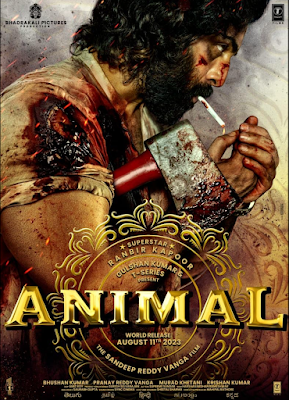
REVIEW 787: ANIMAL

Release date:

December 1, 2023

Director:

Sandeep Reddy Vanga

Cast:

Ranbir Kapoor, Rashmika Mandanna, Anil Kapoor, Bobby Deol, Tripti Dimri, Upendra Limaye, Suresh Oberoi, Saloni Batra  

Language:

Hindi with some English, Punjabi, Marathi etc 


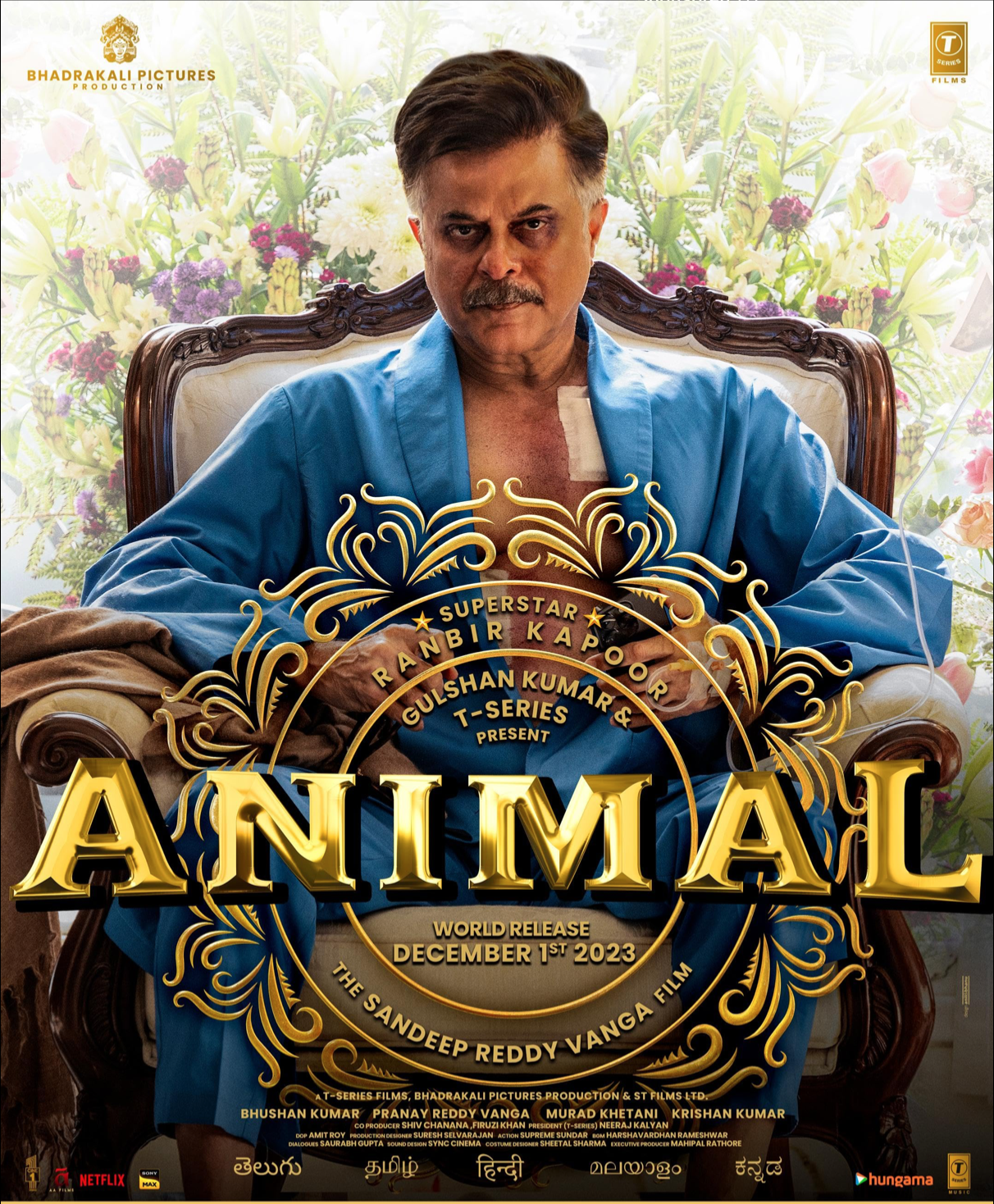
At one point in Animal, a stark naked Ranvijay Balbir Singh (Ranbir Kapoor in his nth role as a man-child) steps out of his mansion to stroll around the compound. (Don’t get too excited, his body is blurred out.) His team of male bodyguards first gawp at his nude frame, then a frisson of joy runs through them and they raise their guns in the air to let out several volleys of celebratory fire. This goes on till Ranvijay’s Daddy (Anil Kapoor) comes running out of the house to lead him away. The exhibitionism, it turns out, was in honour of a happy turn of events I won’t detail here. Beta, says Dad, I know you want to celebrate, but this is not the way. 


I cannot remember the last time the gifted veteran actor’s dialogue delivery was this strained and this unintentionally comical. Can’t blame him alone. That scene is so ridiculous, the phallic symbolism so in-your-face, the attempt at profoundness so laughable, and the sum and substance of the episode so juvenile that I burst out laughing. 


Ranvijay is fixated on his nether regions throughout Animal. He keeps drawing attention to the area by either pointing at his crotch or baring it or talking about it or griping about his underwear. In one scene, he speaks of both his “penis” and “anus” – his choice of words, not mine. It is all meant to be very very cool.


Animal is directed by Sandeep Reddy Vanga who debuted with Arjun Reddy (Telugu, 2017), and remade it in Hindi as Kabir Singh (2019). Animal – edited by Vanga and co-written by him with Pranay Reddy Vanga, Suresh Bandaru and Saurabh Gupta – seems bent on enraging those who slammed his earlier works. That goal is evident throughout this boring, blood-spattered film – in Ranvijay’s bizarre remarks and deeds, the all-pervasive violence, misogyny and gore. 


So that’s 3 hours and 21 minutes of revenge against those who criticise misogynistic cinema. 201 minutes of a desperate desire to shock and/or offend. 


Don’t be deceived into considering it mindless though. Bloodshed and immaturity may rage across Animal, but make no mistake about this: the film is steeped in messaging about victimhood – male victimhood and an allusion to the majority community too. 


Vanga’s film is a painfully long account of a boy longing for his father’s love. The said Dad is the industrialist Balbir Singh who has no time for his children. His neglect translates into anti-social behaviour and obnoxious cockiness only in Ranvijay who becomes an obsessive son and entitled lover, while his sisters somehow grow into women who don’t resent or bash up all and sundry.
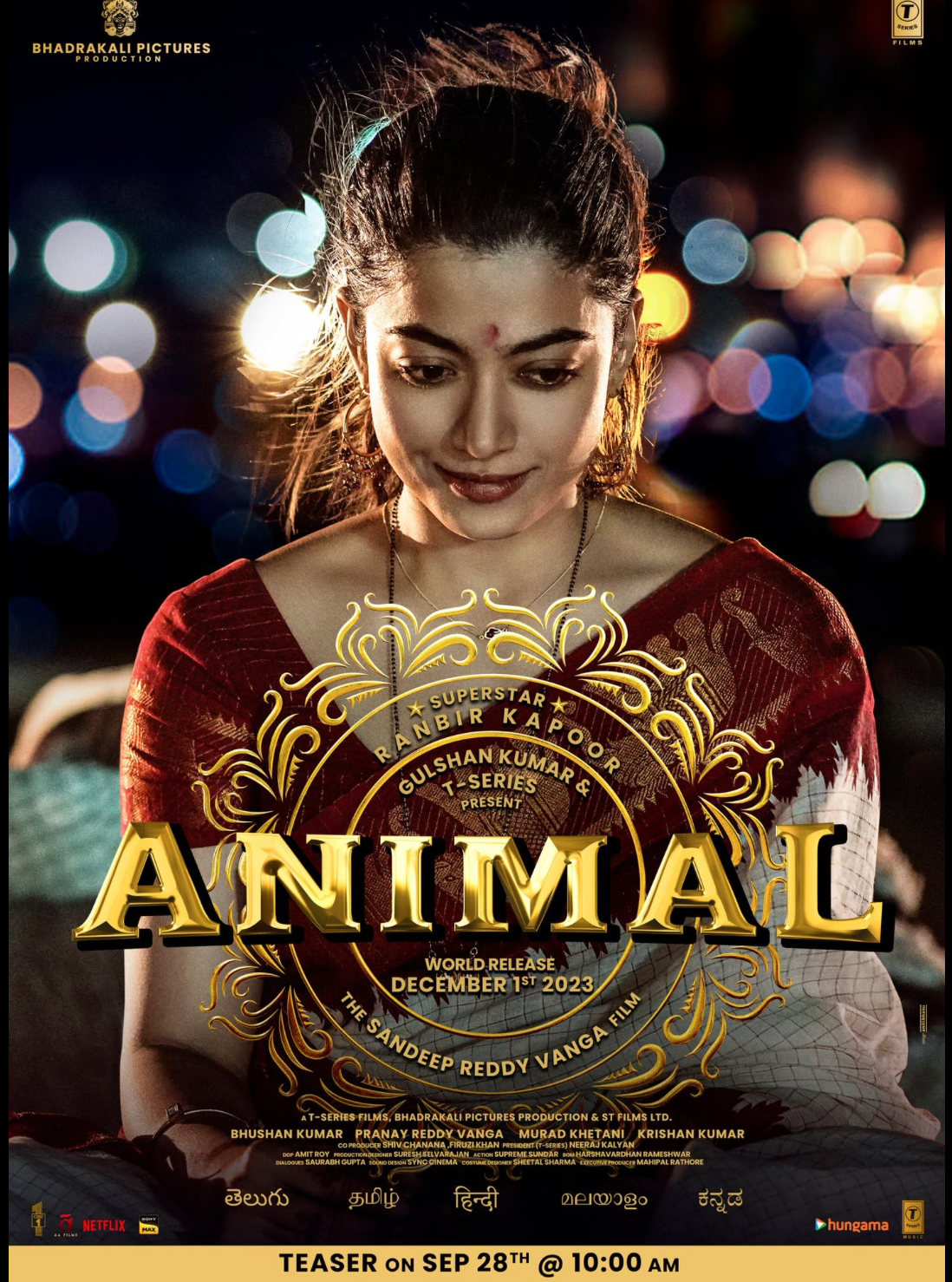
 

Daddy issues have been the subject of numerous films. The re-release of the iconic Malayalam film Spadikam this February, 28 years after its initial run, was a troubling reminder that male-dominated industries have for decades used paternal rejection to justify and normalise male violence, including a hero beating up a female romantic partner or spouse. Spadikam’s protagonist (Mohanlal) was an anguished soul who repeatedly struck his lover (Urvashi), but it was all portrayed as no big deal. In Animal, Ranvijay is aggressive with his wife Geetanjali (Rashmika Mandanna), going so far as to injure and scar her in an extended scene of violence, but it is all insidiously presented with deftly camouflaged empathy – for him. 


For the zillionth time, let me pre-empt the clichéd question that always comes from defenders of such cinema: violent men do exist in the real world and a violent man can certainly be the central character in a film – the issue here, as always, is the manner of the portrayal, the script’s indulgence towards him, the humour and coolth written into his fictional character, and the various means used to give him an allure despite his violent ways.


The strategised depiction of Ranvijay and his arch enemy Abrar (Bobby Deol) – arriving late in the second half – illustrates how the difference between a film’s gaze on two equally violent characters is used to steer audience reactions to them. Both commit horrifying acts, both treat women terribly, yet there is never a doubt about who is the hero or with whom the director wants our sympathies to lie. Animal may call itself Animal with reference to Ranvijay, yet his animalism is preceded by scene after scene dwelling on his childhood pain, his protective brotherly conduct, his aversion to sexual harassment, his advocacy of marital fidelity and so on, thus establishing him as a traumatised man with innate goodness. By the time his beastly side is exposed, a point has been firmly made that everything he does that is seemingly wrong is in fact done for the greater good. In contrast, the only Abrar we get to know is the brute who kills, rapes and terrorises. 


For good measure, Abrar’s Muslimness is underlined by pointedly mentioning his family’s conversion to Islam. 


If Ranvijay rips up human flesh, it is to avenge an attack on his father. If Ranvijay cheats on his wife (mind you, after lecturing other men when they cheat on their wives), he does it for a noble cause. Poor misunderstood Ranvijay had sex only to save his family, you know. 


Ranvijay assaults Geetanjali and a defence is woven into the script. He proposes that just as there is a first kiss and a first time having sex in a relationship, so also there should be a first slap. And guess who gets slapped first? 


Sigh. Poor misunderstood, suffering, victimised Ranvijay.


Poor Ranvijay who has a solitary wife, and is up against evil, brutal Abrar with three wives. 
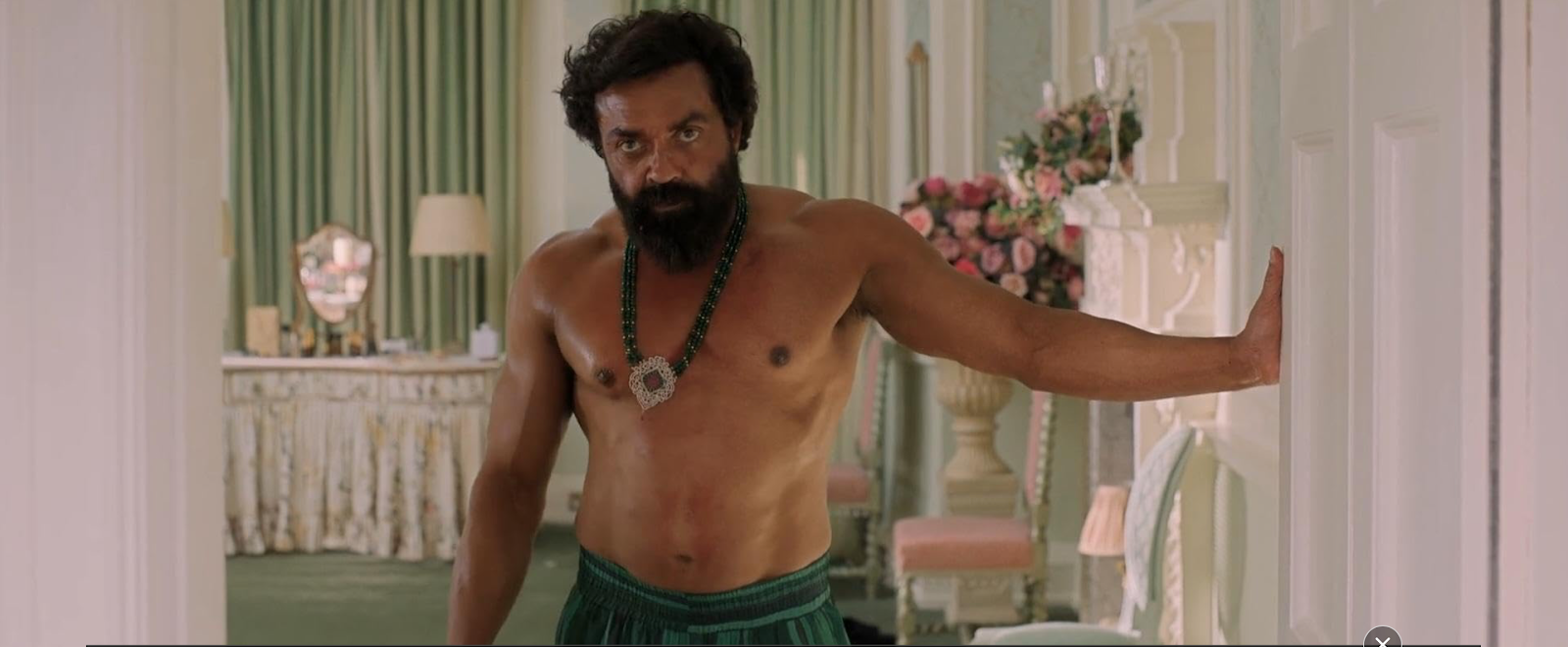
 

Bobby Deol’s Abrar has been shaped in the same mould as Alauddin Khilji from Padmaavat and other fictionalised interpretations of historical Muslim warriors who have dotted Hindi films in the past decade. Abrar eats cake in Animal in the way Padmaavat’s Khilji tore into meat. Abrar tears into his young wife in the way Padmaavat’s Khilji raped his wife. A filthy Abrar barges into a room filled with people and initiates sex with his bride, unmindful of the others’ presence.  


Now contrast this with the mellow tone of the scene in which Ranvijay converses with Geetanjali while examining the bruises he inflicted on her body. 


Note too that the relentless cruelty inflicted by Ranvijay on various people is bookended in this carefully constructed narrative by lengthy scenes emphasising his vulnerable nature. 


So, to circle back to that predictable question, “Violent men do exist, so what’s wrong with a film portraying reality?”, I repeat: yes, violent men do exist in the real world, and the issue here, as always, is the director’s gaze on them and their violence.


Animal brims with an intense dislike of women, outspoken women in particular, and evolved, gentle men. It begins with a derisive use of the word “toxic” in a fable narrated by Ranvijay about a monkey that harassed a princess. The contempt is obviously for the term “toxic masculinity”, popular in the feminist lexicon, that was widely applied to Vanga’s first two films. 


At one point, Ranvijay mocks Geetanjali for complaining because she has to change pads for four days in a month – he claims she complains, we don’t hear her doing so – while he, he tells her, has not complained though his body has been invaded by doctors during a life-threatening situation. Talk about false and stupid equivalences. Periods are a natural bodily function – often horribly painful, always incredibly inconvenient – that every woman bears for every single month of her entire reproductive life lasting for three to four decades. Ranvijay’s condition, on the other hand, is caused by a human aggressor; it is not the biological fate of all men. Here, Ranvijay is a version of misogynists who troll women for using the social media to raise awareness about cramps, excessive bleeding, agonising period pains and the trivialisation of these experiences by society. 


Oddly enough, the determinedly misogynistic Animal writes a feminist element into Ranvijay’s character – he explodes with anger when his brother-in-law roughs up his sister early in the film. There is no progression shown from that scene to his own extreme hostility to his wife. 


Animal’s terrible attitude to women runs alongside a cunning use of India’s religious minorities. 


Abrar and his cohorts are stereotypes diligently being peddled by Hindi cinema to echo the current Islamophobic national discourse. There is even a Muslim man in the picture who is described as a butcher from Istanbul. His sole contribution to Animal is a stomach-churning slaughter of men. 


The Sikhs in Animal are Ranvijay’s brethren and protectors, an extension of a positive stereotype: the fierce, fiercely loyal Sardarji. They are also his allies against Abrar’s marauding gang. All this leads up to a climactic confrontation between shirtless men on an airport tarmac – talk about Hindi film clichés! – in which a kirpan is handed to Ranvijay so that he can wrap up a fight unto death.
 

A Christian in Animal confuses Balbir Singh’s company logo with the Nazi Swastika. Since prominent Hindu religious symbols are ubiquitous in India, one assumes a Christian was chosen for that episode to play along with right-wing propagandists who project Indian Christians as alien Westerners. Presumably, the idea here is to hint at Hinduism being a globally misunderstood faith. 


Without giving away plot points, I can tell you this much: according to Animal’s underlying philosophy, Sikhs are family and very much in the Hindu fold, Muslims are family that chose the wrong path and are now out to destroy the mother clan, and Christians are the other. 


The mind games played by Animal are packaged in slick production design and cinematography, accompanied by a pulsating sound design, infectious music, and Ranbir’s immersive performance. 


Despite all this, I was bored stiff by the film. 


Startling violence is used here to compensate for a thin, trite storyline. In the first half hour, I was curious about where Vanga would take it, but I spent the remaining 171 minutes stifling yawns at the transparent effort to be disgusting. The camera zooms in on a pulverised human eye. A knife is run back and forth, back and forth, back and forth over a human neck in close-up instead of one swift slash that filmmakers usually favour. 


For the record, Animal is not the most violent film ever made in India. Others have done as bad or worse. It is ugly though – in both its use of violence and in its intent.


Ugly. Hate-filled. Tedious. Self-indulgent. And hawking a loathsome agenda. 


Misogynists insist that feminists hate men, although all that feminists want is gender equality. You know who hates feminist men? Answer: misogynistsYou know who hates men in general? Answer: misogynistsI cannot for the life of me imagine a feminist – female or male – ever conceiving a film that makes men look as foolish, puerile, self-pitying and pathetic as Animal does. 


Rating (out of 5 stars): 0   


Running time:

201 minutes 


Poster courtesy: IMDB 

Friday, June 5, 2020

REVIEW 781: CHOKED

Release date:
June 5, 2020
Director:
Anurag Kashyap
Cast:
Saiyami Kher, Roshan Mathew, Parthveer Shukla, Amruta Subhash, Rajshri Deshpande, Upendra Limaye 
Language:
Hindi  


Sarita Pillai nee Sahastrabuddhe’s life mirrors the humdrum lives of millions of middle-class Indian women. She wakes up every morning, cooks, prepares her kid for school, sends him off before heading to her own office in teeming Mumbai where she spends her day in mechanical, emotionless toil as a bank teller before returning home to cook, serve her kid and husband Sushant, admonish the latter for being a layabout, clean up and sleep. 

Forward to the next day. Wake up. Repeat. Sleep. And the next. And the next. Wake up. Repeat. Sleep. Wake up. Repeat. Sleep. 

Her listless existence and her evident disinterest in Sushant are punctuated occasionally by lively kitty parties with women in the neighbourhood who revel in gossip, including about members of their own group. 

We know from the start that there is and will be more to Sarita, heroine of director Anurag Kashyap’s Choked: Paisa Bolta Hai (Money Talks) that is streaming on Netflix from today. We know we can expect more than that surface mundaneness for two reasons: first, the film’s smartly executed prologue indicates some hanky-panky with money; and second, hints are dropped early on about an event in the past from where her marriage went downhill. 

Sushant for his part has more spark and appears to have more going for him than she does although he does nothing. He hangs around contributing zilch to the housework, casually plays his guitar at home and plays carrom with friends in the building. Sarita’s tetchiness towards him inexplicably does little to dampen his affection for her or dull the twinkle in his eyes, but it also does not enthuse him enough to lift a finger to share her burden around the house. 

Then one day, as the trailer has already revealed, Sarita unexpectedly comes across a stash of cash and for the first time in the film we see her face come alive. 

Choked is about what she does with that secret horde, and through that adventure it tells the story of a life stuck in a rut, a relationship at the edge of an abyss, greed and corruption in the era of demonetisation. 

At first Choked is intriguing. The manner in which Kashyap portrays Sarita’s boredom and sense of hopelessness in her role as wife and home manager is striking. Her act of latching a door and switching off a light night after night after night before going to bed is used to remarkable effect to underline the repetitiveness of her routine and the monotony that domesticity can bring. 

Sarita’s empty eyes and irritability when contrasted with Sushant’s easygoing nature and their son’s charm allude to a background that must have been far more interesting than her current busy yet godawfully drowsy routine. 

Besides the lead trio of Choked are a good fit. Sarita is played by Saiyami Kher who had the misfortune of making her Bollywood debut with Rakeysh Omprakash Mehra’s worst film till date, Mirzya (2016), but managed to reveal her innate charisma even in that dismal enterprise. The young actor has an impressive personality and speaking eyes. In the role of Sushant is the attractive stage and Mollywood artist Roshan Mathew whose brief filmography includes an aching portrayal of a man in love with a man in a conservative society in Geetu Mohandas’s otherwise middling Moothon. And Parthveer Shukla who plays their son is a little fireball of darlingness without the irritating precociousness that so many directors seem to demand of their child actors. 

Once the nuts and bolts of their relationship and the neighbourhood dynamics are established though, despite a series of twists and turns right till the end, the narrative is curiously lacking in energy. 

Sarita and Sushant’s back story, from which the title Choked is drawn, is not quite as fascinating as it is made out to be. His subsequent irresponsible behaviour and the progression of their equation are unconvincing. 

Kashyap and writer Nihit Bhave appear to be making a point about Narendra Modi’s decision in 2016 to demonetise select Indian currency notes – the point being that the corrupt and the powerful found their way around it, while ordinary citizens suffered. However, they seem to have internalised it so much, they say what they seem to want to say so hesitantly and in such a roundabout, meandering manner, that Choked almost comes across as praise for demonetisation, a measure that has had a  disastrous impact on the Indian economy. There is even a song and dance featuring the hero celebrating demonetisation that is placed prominently in the narrative. The collective effect of these elements sadly dilutes the impact of the cheeky song that plays with the rolling credits in the end. If Choked is intended as a sarcastic critique, it depends too heavily on the viewer being indulgent towards the director, being aware of his politics and off-screen stances and having studied the country’s reaction to the present prime minister.

And no ya, the play on “choked” does not work either. 

What does work is the constant flow of dialogues between languages in the way they naturally might in the Mumbai home of a couple in a mixed marriage. although Mathew swallows some of his lines as a result of which I often could not make out what Sushant was saying in his mother tongue. Of course a lot can be forgiven because he is cute. Ironically, his Hindi diction is excellent, and comes as a package with a delightful trace of a Malayalam accent. The precise way in which he says “contracts” and pronounces “L” or the way she pronounces “D” are fun to hear because their accents are not being caricatured. 

The usually reliable Amruta Subhash is inconsistent though – warm and hilarious in parts, but in one passage, surprisingly hammy.

There are a couple of standout scenes such as the one in which Sarita and Sushant fight in bed with their kid lying asleep between them and another involving the couple, a kitchen drain and top-notch sound design by Gautam Nair. The construction of both scenes is vintage Kashyap, as is the mischievous closing song.

What is not vintage Kashyap is the lack of clarity and sharpness in what he seems to be saying about demonetisation and achhe din

And exactly what is the point in showing us a lazy jerk of a husband who never does any work at home, is inconsiderate to his wife but is somehow presented as a sweetheart, is made to sound at one point as though he is willing to do anything for her but oh how unfair is she, and in the end gets to save the day? 

Kashyap’s last two breathtakingly good films were Mukkabaaz and Raman Raghav 2.0. Choked wants to say a lot, but is not even as hard-hitting or entertaining as his tweets.

Rating (out of 5 stars): 2

Running time:
114 minutes

This review has also been published on Firstpost:


Poster courtesy: IMDB